INTRODUCTION
To remember is an act of love. To preserve is an act of resistance.
Preserving our history is not passive work — it is a deliberate act of love, labor, and legacy. For African American families, the act of remembering carries a particular weight. Too often, our stories have been silenced, distorted, or left out entirely. In this era of renewed attempts to erase or rewrite the truth, the archive becomes more than a collection. The work of memory becomes sacred, and it becomes a form of resistance.
The Family Archive stands as both tribute and testimony — a space where photos, documents, and remembrances are not just stored, but honored, protected, and shared.
Through the Photo-Doc Gallery, Preservation Efforts, and Obituaries & Remembrances, we bear witness to the lives that came before us. Their stories matter. Their names matter. And in telling them, we claim what was always ours: our history, in our own words.
PHOTOGRAPHIC GALLERY
Every image holds a story — a face, a place, a moment in time. In this gallery, we gather photographs and documents that reflect the lives, labor, and love of our ancestors. These visuals are more than artifacts; they are windows into who we were and how we endured.
LETTERS AND DOCUMENTS
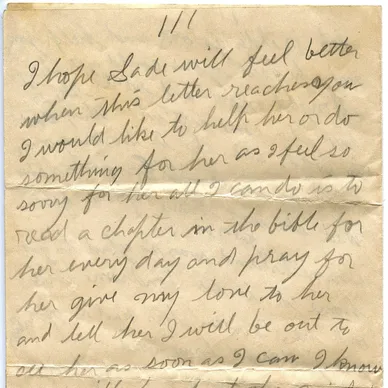
A brief description.
LAND RECORDS
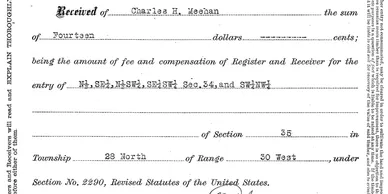
A brief description.
LENA’S MEMORIES
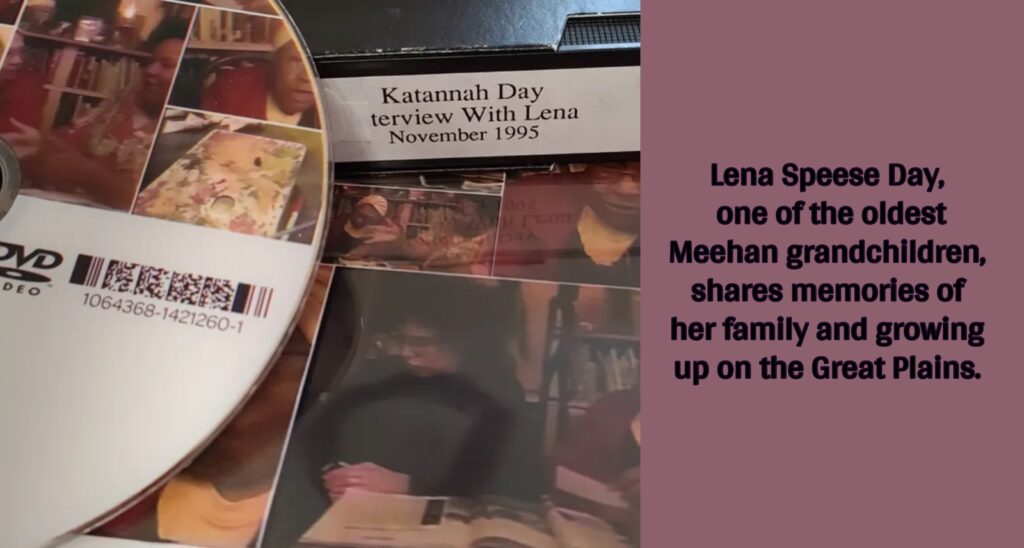
Memory lives in fragments — a voice at the kitchen table, a gesture passed down, a story told in the hush of evening. In Lena’s Memories, we gather what remains: the pieces that time could not take, carried in the heart of a woman who remembered not for herself alone, but for all of us.
These are recollections woven from love and labor, joy and sorrow, and the slow dance of days.
In Lena’s remembering, we find not just the past — we find ourselves.
OBITUARIES & REMEMBRANCES
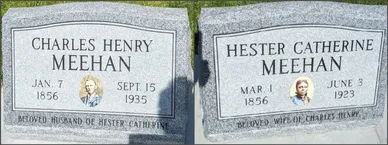
Here, we honor those who have passed, not only with names and dates but with memory, voice, and love. Each life remembered is a story reclaimed — a refusal to forget and a commitment to carry their legacy forward.
PRESERVATION EFFORTS
Saving our history requires intention. From digitizing fragile documents to safeguarding family letters and heirlooms, our preservation work ensures that future generations can access the truth of our past — not through someone else’s lens, but through our own.
WHEN THE LETTERS STOP: THE FUTURE OF FAMILY HISTORY IN THE DIGITAL AGE

The Future of Family HIstory In the Digital Age
No more letters from a great-aunt. No more poems written on now-crumbling paper. A hundred years from now my descendants won’t know what I wrote to a beloved cousin because it was an email, long gone with the account when we both died.
We rely on people’s pasts living on after they are gone in the man records and personal paper based items they saved.\
Earlier generations left evidence simply by living. Their desks filled. Their drawers accumulated. Their lives pressed themselves into paper.
Today, our records auto-delete. Our correspondence is stored in distant servers. Our handwriting rarely appears. In preserving efficiency, we risk losing the residue that once allowed future generations to sense who we were.
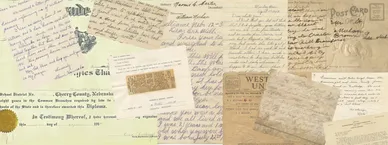
There was a time when relationships were folded into envelopes. Parents wrote children. Business was conducted in ink. Rent was acknowledged with a signature; loans were witnessed on paper; grief and joy traveled by post. Those documents remain in my care — letters, receipts, certificates, marginal notes — and through them I have come to know voices long silenced. The weight of the paper, the pressure of the pen, even the folds and creases carry evidence of a life lived in real time.
Today, much of our record exists behind passwords. Conversations unfold in email threads and text messages. Contracts are signed with a cursor. Notices arrive electronically and disappear just as easily. If earlier generations preserved memory by default, ours will preserve it only by intention. What will remain of us when accounts close and platforms fade? This archive is not only a collection of the past; it is a reminder that memory must now be chosen, curated, and safeguarded — if it is to endure at all.
My entire project is built on what survived accidentally.
Not curated memoirs. Not polished autobiographies.
But:
- A rent receipt.
- A scribbled note.
- A folded letter.
- A church record.
- A marginal comment.
The bits and pieces.
Your work exists because previous generations left disorder behind.
That is a powerful interpretive angle.
You could eventually frame this section not as lament, but as recognition:
Archives are built not only from what we meant to save, but from what we forgot to throw away.
That sentence alone carries weight.
NOTE TO MYSELF: ADD A MILITARY SECTION SOMEWHERE IN ARCHIVES – PERHAPS A SEPARATE PAGE!!