Meehan Family Genealogy
HOW ARE WE CONNECTED?
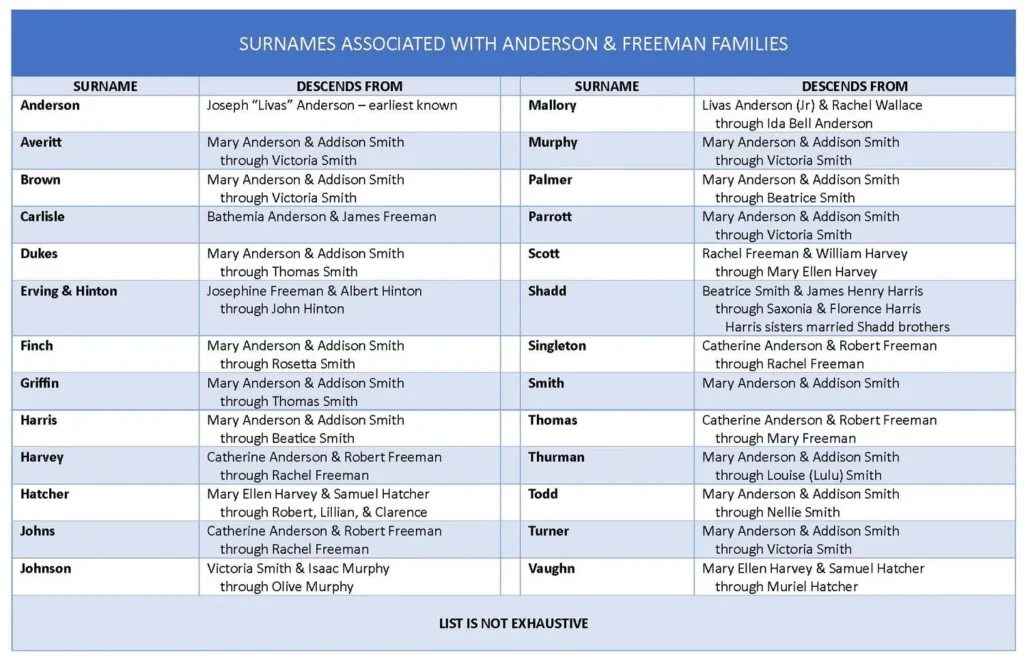
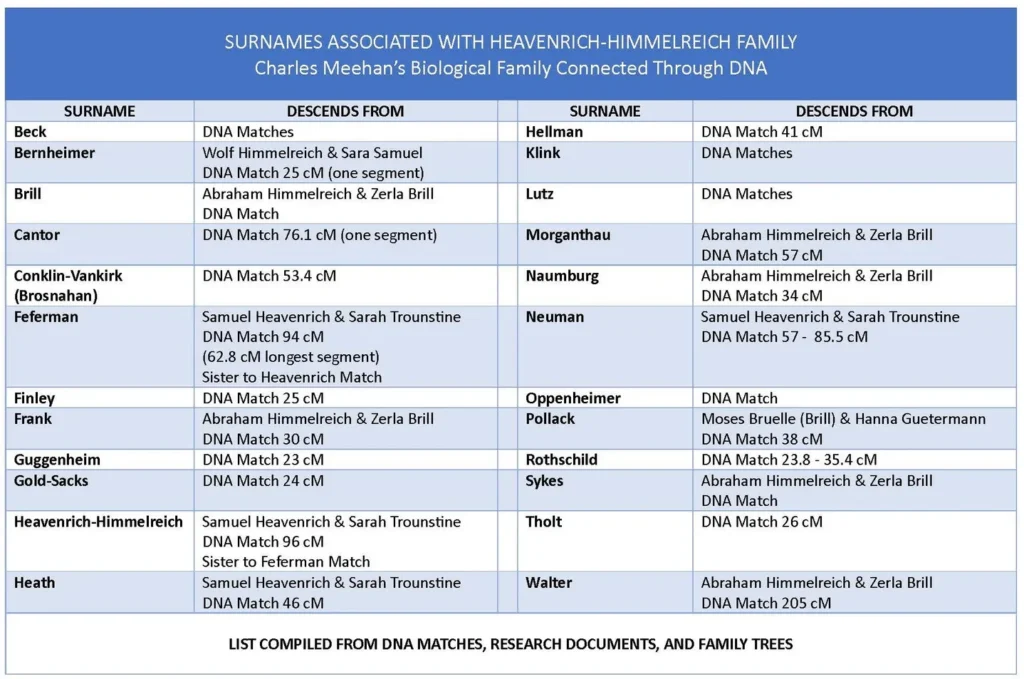
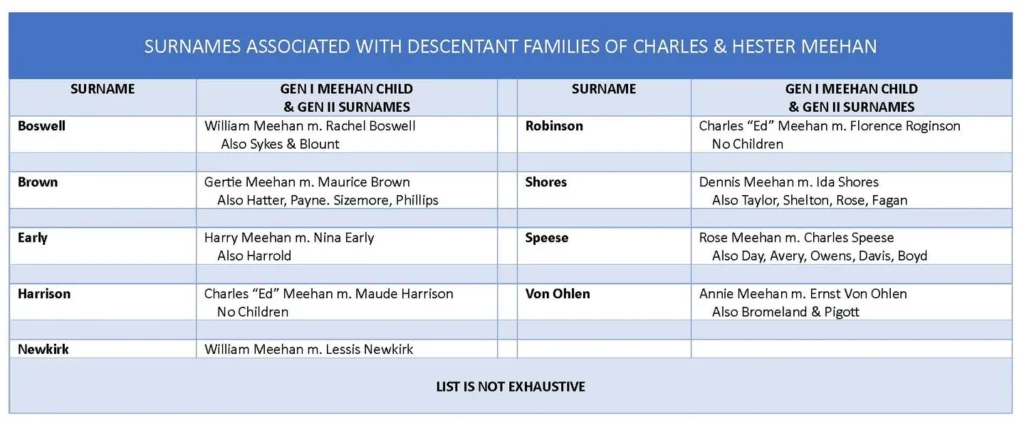
If you have done DNA testing and received your results, you may be curious about how many matches you have and their family connections to you. Below, I have listed some of the most common surnames I have encountered, arranged by the primary family group to which they belong, linking them to the descendants of Charles and Hester Meehan.
This list is not exhaustive and serves as a helpful aid in your genealogy research. While many names are verified through paper research or shared DNA, not all are conclusively linked. Additionally, not everyone with a surname listed here is necessarily related, so your research should support your DNA matches.
If you have questions or suggestions, please feel free to send me a note.
The picture above was taken at the Meehan Family Reunion in Omaha, Nebraska, in 2016. Descendants of five of the seven Meehan children (Annie, Den, Rose, Gertie, Bill) are included. This gathering may have been the first time descendants of all branches had come together in almost 100 years.
Catherine DNA AS A RESEARCH TOOL
“Testing older generations through DNA testing allows you to ensure that the results are closely aligned with your ancestors’ genetic makeup, minimizing the risk of mutations that may occur in subsequent generations.” DNAeXplained – Genetic Genealogy, October 16, 2016.
These results are made available for family members utilizing DNA as a research tool because I represent the “older generation.” In 2024, I am the individual genetically closest to Charles and Hester Freeman Meehan. Many of their descendants today are two, three, or four generations removed from them, perhaps facilitating family connections for someone looking to connect with their ancestors.
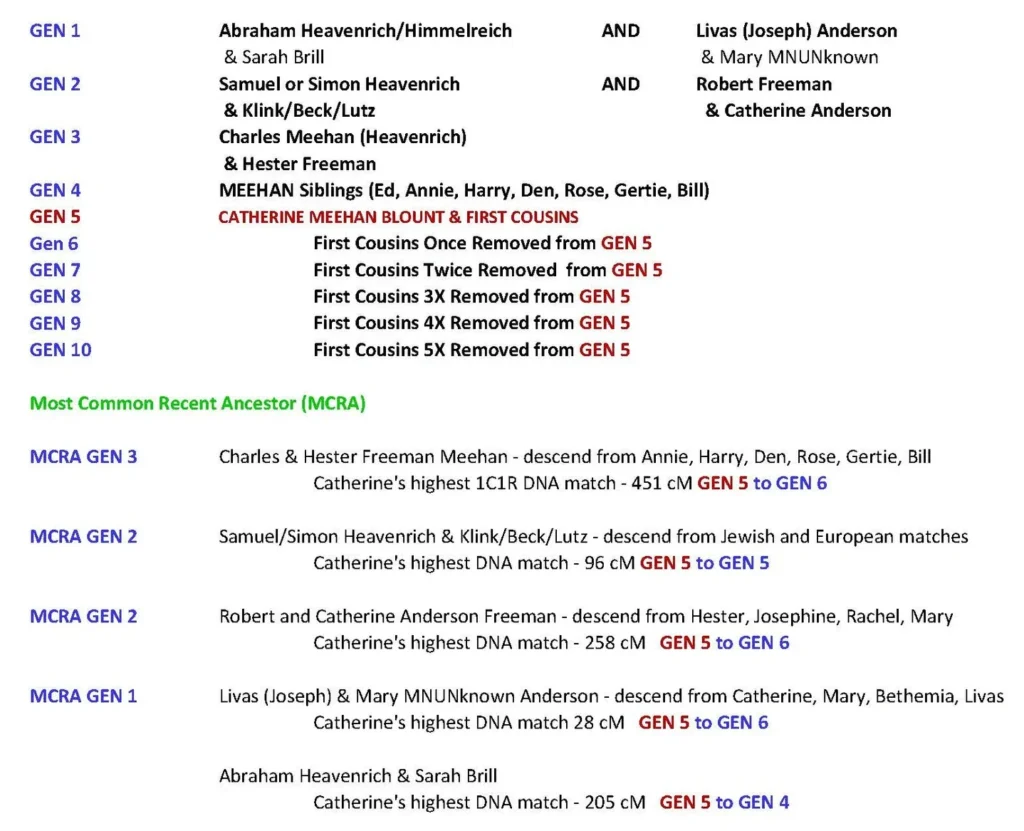
The FIRST CHART illustrates the generations of the Meehan family, also known as the Heavenrich family. Generations one through four span from the late 1700s to 1971, marking the death year of Gertie, the last surviving Meehan sibling. Generation five encompasses the grandchildren of Charles and Hester, with me being the only grandchild still living.
The SECOND CHART highlights the centimorgans (a measure of shared DNA) between other DNA testers and myself, categorized by Most Recent Common Ancestor (MRCA) relevant to me.
Notably, there are no Irish DNA matches for Charles Meehan’s parents.
Charles’s DNA is represented in the matches with the Heavenrich/Himmerlreich and Klink/Beck/Lutz families.
Feel free to reach out if you have any questions, concerns, or comments, or if you want to contribute to this genealogy research.
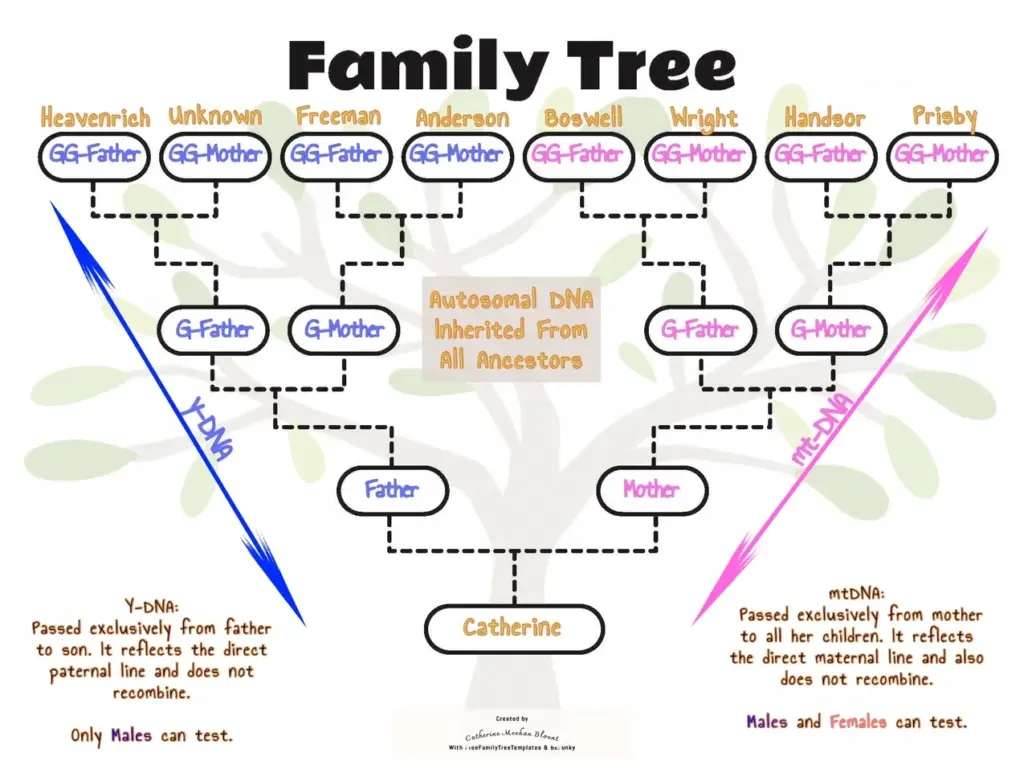
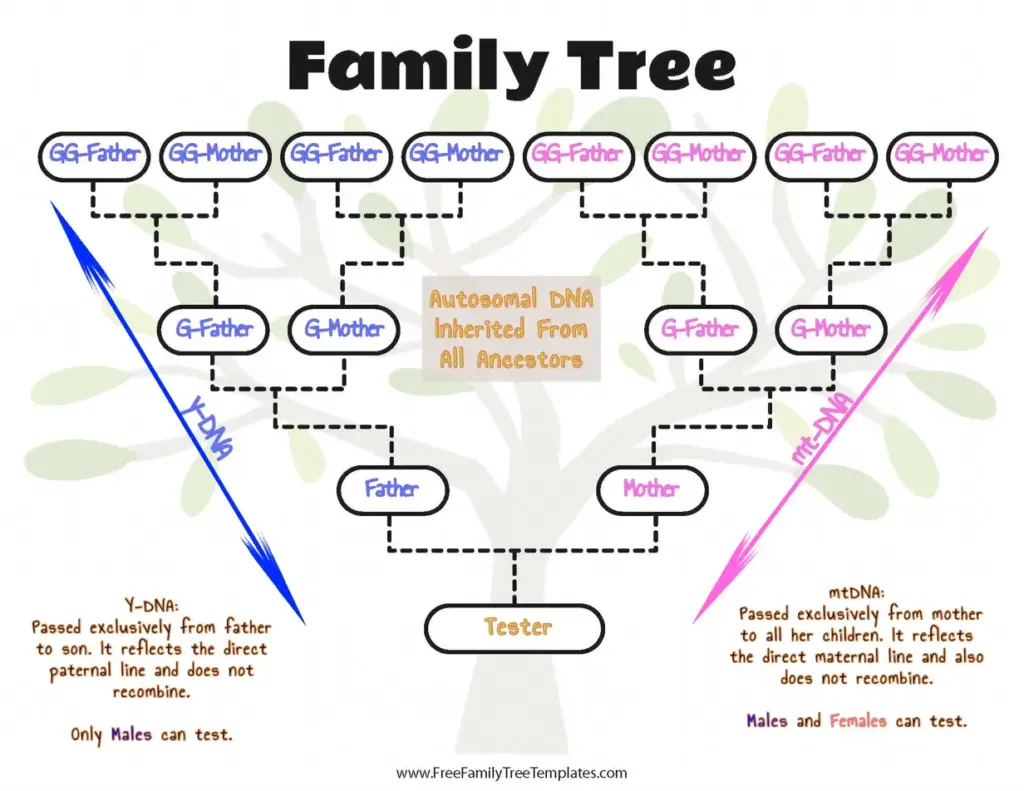
These charts are provided as examples to assist anyone trying to understand Y and mt (mitochondrial) DNA.
[NOTE to CB: add definitions and instructions.]
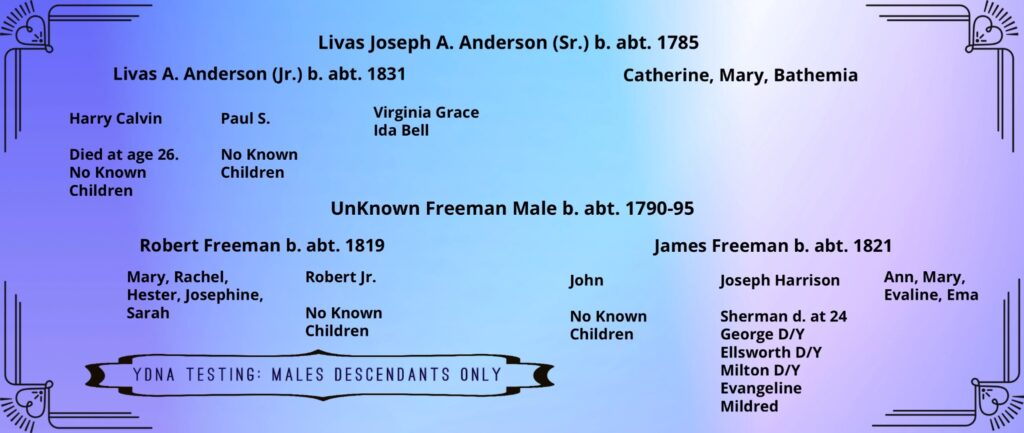
NOTE: Add a paragraph here about following DNA patterns.
IF YOU ARE CONSIDERING A DNA TEST
DNA doesn’t just answer questions — it asks new ones, and it doesn’t let you choose which ones. If you’re not prepared to learn anything about a family you believe you know, or if someone you love could be hurt by what surfaces, think carefully before you test.
Even people certain of who they are — because they look like the family, and their parents looked like theirs — can be surprised. In endogamous communities, this cuts deeper still: DNA can reveal unexpectedly high matches between people who married in, or families that intertwined generations before anyone knew to look. Add a layer of incest to that endogamy, and the resemblance that once felt like proof of belonging can become something harder to sit with.
DNA research is not for the faint of heart. It finds truth — not necessarily the truth you were braced for.
A few notes on choices I made, so you can adjust to taste:
- I kept “not for the faint of heart” as the closer since it’s a strong, quotable line that matches the register of your other section headers.
- I left your own DNA journey implicit rather than naming it, so the warning reads as universal guidance rather than only your story — but if you want a bridging sentence tying it explicitly to your own findings, I can add one.
- I trimmed “the milkman story” contrast and the pedigree-collapse mechanics, since those felt more like conversational elaboration than page copy — but if you want a slightly longer version that unpacks endogamy/pedigree collapse a bit more for readers unfamiliar with the terms, I can draft that too, especially since you’ve already got the “endogamy is the cause; pedigree collapse is the effect” framing on the Boswell-Handsor page it could echo.