Black Canadian Homesteaders Form Roots of DeWitty
They Came Prepared
SIGNIFICANCE OF CANADA’S ELGIN SETTLEMENT TO BLACK HOMESTEADERS OF DAWSON AND CHERRY COUNTY, NEBRASKA
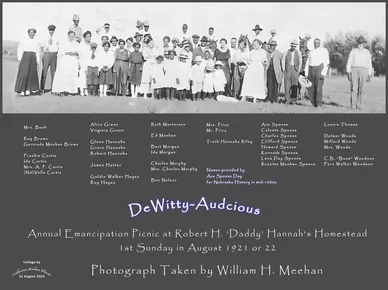
In 1914, seventeen-year-old Bill Meehan lamented the family’s move from Dawson to Cherry County, Nebraska. He wrote a poem with the line, “We stick just because we are here.” My humble opinion is that they “stuck” because decades of living and working together had forged these individual family units into a cohesive community they carried across a continent.
Over the years, much has been written about homesteaders of African descent who settled across the American West. Many black homesteaders were part of the post-Civil War migration of formerly enslaved people known as Exodusters. The migration route started far to the north for a small group of homesteaders who settled in Dawson and Cherry counties.
Years before the Exoduster movement, African-descended people escaping slavery in the United States and Free People of Color escaping tenuous lives made their way to Canada. In 1848, the Elgin Settlement (Buxton) in Kent County, Ontario, was established. It became home to families who eventually formed the nucleus of African-descended homesteaders in Overton and DeWitty, NE. Enslaved in Missouri, Isaac Riley is considered the first resident of the little Canadian enclave. Mr. Riley was among the first settlers to leave the Elgin Settlement for Nebraska.
The African-descended homesteaders from Canada were a cohesive group of family and friends. Their experience in the Elgin Settlement honed their skills in community building, farming, and gaining economic stability. Education was fundamental to the community; many children attended the Buxton Mission School. Those living in the Elgin Settlement were landowners and were required to buy lots of at least fifty acres.
Ten years after the signing of the U.S. Homestead Act in 1862, Canada passed a Homestead Act. The Elgin settlers made the monumental decision to forgo land in Canada. Their sights were set on Nebraska. Between 1880 and the early 1900s, several members of the Elgin Settlement, most of whom were lifelong friends, made the trek to Dawson County, Nebraska. This group of settlers was prepared to take on the rigors of homesteading life, and they were determined to succeed.
It is not clear whether the Elgin families made a planned migration or if they followed one another to Nebraska. The Guilds/Robinson family may have been among the first to make the trip in about 1879. They were soon joined by the Riley’s and, between 1880 and 1890, the Emanuel’s, Rann’s, Meehan’s, Hatter’s, Walker’s, Crawford’s, and Brown’s. Others also made the journey, though the names included in this article do not constitute an exhaustive list.
Garrison Shadd, a Buxton (Elgin) neighbor and brother of abolitionist Mary Ann Shadd Cary, purchased land in Nebraska. Although he never relocated, he spent some time in Columbus in Platte County, NE. The diary of Garrison’s son, William, says that Garrison left Buxton for Columbus on October 11, 1884. He purchased a 2-way ticket, indicating his intent to return to Canada. A list published in the Columbus Journal on December 17, 1884, includes a letter unclaimed by Mr. Shadd.
Brownlee, Dewitty & Audacious
One of the first members of the Overton community to set out for the Sandhills was Leroy Gields. Mr. Gields was born in Canada about 1859 and migrated to Overton about 1879 with his mother, sister, and her family. On June 12, 1902, he filed a Homestead claim in Valentine, Cherry County, and on July 10, 1907, he published a notice of intention to make his final five-year proof. Other families from the original Canadian homesteaders made their way to the Sandhills. Rev. O. J. Burckhardt, an African Methodist Church missionary evangelist, reported that “following the drouth years of 1905-07, thru a white agency they learned of Cherry County homesteads, and again Mr. William Walker and Charley Mehan with their families became pioneers of the Brownlee settlements.”
Rose Meehan Speese said in a letter dated May 23, 1963, that William Crawford, Dennis Meehan (born in Overton in 1885 to Charles and Hester Meehan), and Mr. [George] Brown traveled to Cherry County in the fall of 1906 to “look over the situation.” By then, a few other Overton families were already in the Sandhills. Ava Speese Day and Albert Riley share accounts of several families forming a small wagon train in March 1907 and leaving Overton for the Sandhills. Rose Meehan Speese recalled in a letter to her brother Bill that they departed Overton in May 1907. Those who did not travel by wagon rode the train.
When the Canadian core of black homesteaders arrived in Cherry County, they settled near Brownlee. The Brownlee community was welcoming and helpful. Over the years, a bond between the two communities has lasted for a century. For several years, the African-descended homesteaders used the Brownlee post office.
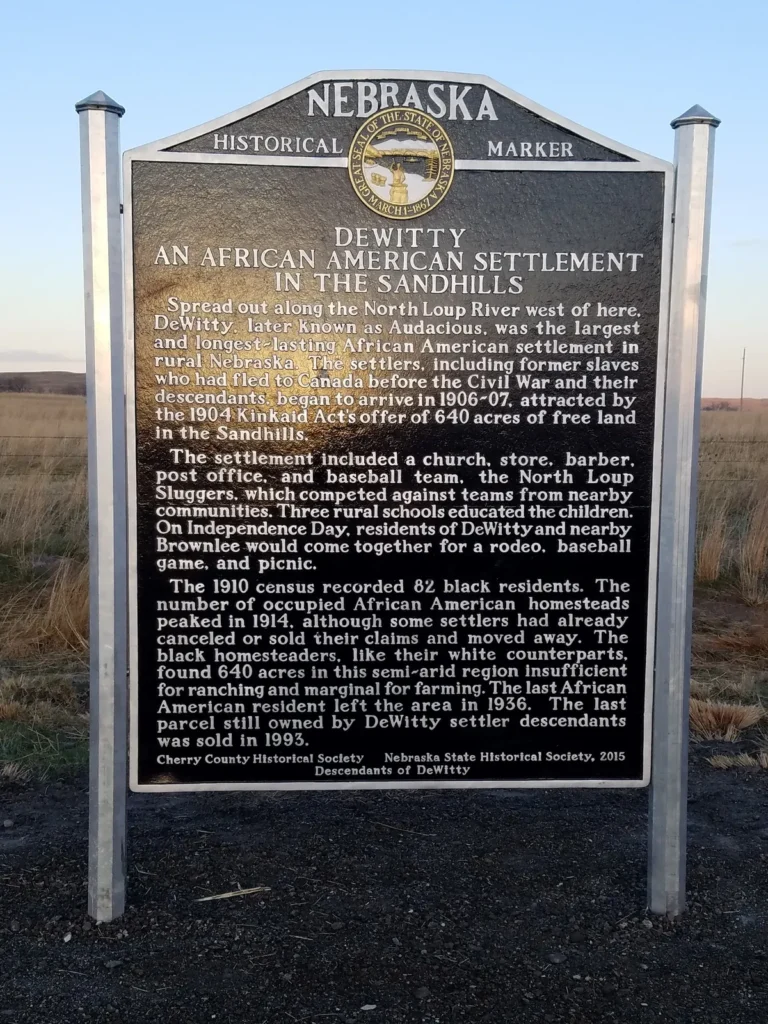
In 1915, homesteader Miles DeWitty donated some of his land for a post office. The United States Postal Service announced the establishment of the new post office on April 6, 1915. The town of DeWitty was born. One year later, Mr. DeWitty left the area, and the new postmaster, Dennis Meehan, renamed the post office and town Audacious. He believed it was a fitting description of the people who settled there. One of the author’s fondest bits of family lore was her father’s claim that the town of Audacious was named after him. Her father, Bill Meehan, was the younger brother of Dennis, the postmaster.
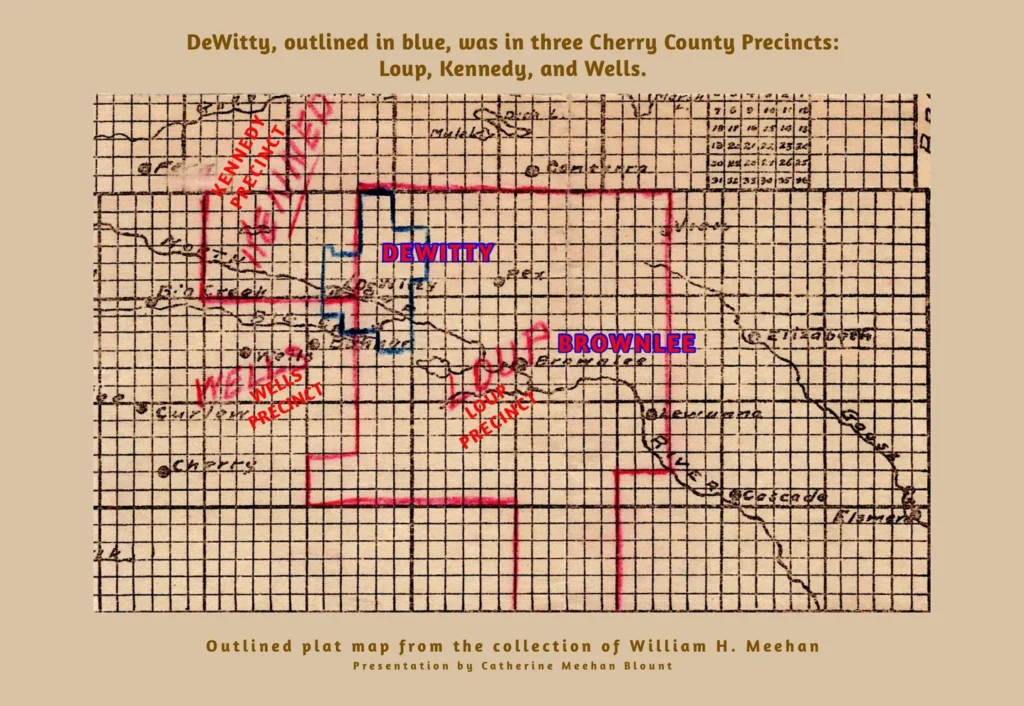
DeWitty eventually extended across Wells, Loup, and Kennedy Precincts, but by 1936, DeWitty ceased to be. A small number of the Black homesteaders returned to Canada. Most families remained in the United States, settling in places like Alliance in Box Butte County and Denver. Others relocated to larger cities like Omaha, Chicago, and St. Paul, Minnesota, or further west to California. Through the years, the black Canadian homesteading families maintained the bonds of family and community, regardless of their physical location.
The DeWitty/Audacious community became known as Nebraska’s “largest and most permanent colony” of African American homesteaders.” It is my firm belief that the success of the DeWitty homesteaders is attributable, in part, to their shared Canadian experience.
———————————–
SOURCES
“Nebraska’s Negro Homesteaders Located at DeWitty,” Nebraskaland Magazine, Jean Williams, 1969. Retrieved from Cherry County NEGenWeb Project © 2000-2011.
Statement by William Crawford published in the Overton Gazette, February 24, 1905.
Garrison Shadd Diary Collection, Shadd Diary & Transcription, 1881-1889, Rural Diary Archive, Library, University of Guelph, Ontario, Canada.
The Columbus Journal (Columbus, Platte, Nebraska, United States of America), December 17, 1884, Wed., Page 3.
Crossing the Border, A Free Black Community in Canada, Sharon A. Roger Hepburn, University of Illinois Press, 2007.
Personal letters from Rose Meehan Speese to her brother, William H. Meehan, from the collection of Catherine Meehan Blount.
The History of the Negro Settlement in Cherry Co. Near Brownlee, by O. J. Burckhardt, A Missionary Evangelist of the African Methodist Church.
William Harvey Meehan, personal conversations with his daughter, Catherine Meehan Blount.
Perkey’s Nebraska Place Names (Publications of the Nebraska State Historical Society, V. 28), J & L Lee Co., Revised Edition, June 1, 1995.
How A Group Of Homesteads Became Dewitty-Audacious
The First Wave
When the first group of Black homesteaders arrived in Cherry County, there is no indication that they intended to establish a town. They came from Overton, in Dawson County, and there they had lived as members of the larger community. For almost ten years, letters were sent to them at the post office in Brownlee.
The Arrival of Miles H. DeWitty
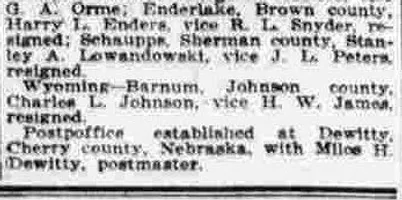
In 1910, Miles DeWitty arrived from Missouri and filed a Homestead claim for 637.20 acres of land, and he “proved up” on April 23, 1915. Earlier that month, perhaps in anticipation of proving his claim, Mr. DeWitty designated a portion of his land for a post office. The newspaper notice that appears here is from a local newspaper dated April 5, 1915.
Another article from the Hooker County Tribune, dated June 6, 1947, reports that Mr Dewitty constructed a “small building … housing the post office and store,” with signage stating “DeWitty Bros. General Merchandise.” The structure, located on his kincaid, changed the community from a group of homesteaders to a town.
Miles DeWitty left the community about a year after that, though one of his sons, John H. DeWitty, remained and proved a 348.45-acre homestead on July 12, 1919.
Then Came Den
On April 15, 1916, one year after the post office was established, a newspaper article announced that the name had changed to Audacious. When Mr. DeWitty left, Dennis Meehan, a son of Charles and Hester, and a man with his own kinkaid, became postmaster. According to the Hooker County Tribune article, the post office was moved to Den Meehan’s kinkaid.
Elton A. Perkey confirms the story of the Audacious name in his book. Nebraska Place Names. Mr. Perkey records that the name was changed to Audacious because the postmaster said the people “were audacious for having settled there.”
That name lasted until the post office was discontinued on April 18, 1918.
The DeWitty Name Stuck
After the post office closed, mail service for the Black homesteaders was once again directed to Brownlee. In the early 1920s, families began to leave the area, and by the mid-1930s, the dream was over, the homesteads gone with the people.
But the name, DeWitty, lingered in history and is thriving in Black history today.
DATABASE of DeWitty Homesteaders
How large was DeWitty? Who were the families? How many families were there, and how many acres did the families own? Where did they come from, and where did they go? They are not forgotten!
Follow the link below to learn more about the people of DeWitty and the land they called home.
Too often, when DeWitty is discussed, only a handful of families are mentioned. This database captures the names and brief biographies of sixty-two families who called DeWitty home. The database was developed from several sources, including Bureau of Land Management records.
NOTE: The list of family names is not exhaustive.
Hannah Rachel Rosetta Meehan Speese – “Aunt Rose”
Born In A Soddy
On March 30, 1891, Hester Meehan gave birth to her eighth child. The birth occurred in the family home, a “Soddy” located “4 1/2 miles N.E. of Overton, Dawson Co., Nebraska. Perhaps sensing the dynamic force birthed into their daughter, the child’s parents bestowed her with not two but three given names, as though two names could not possibly contain the little Rose.
Raised In Overton
Rose spent her childhood in Overton. At age six, she joined the Samaritan Presbyterian Church, where the family worshipped. She attended school in Overton and grew to young adulthood there. Until her end, Rose considered Overton “the old home sod.”
1907 ~ Coming Of Age
On April 5, 1907, The Overton Herald reported, “Miss Rose Meehan gave a birthday party to her friends last Friday night. Over thirty guests were present and all report a good time. Miss Meehan received a large number of nice presents.”
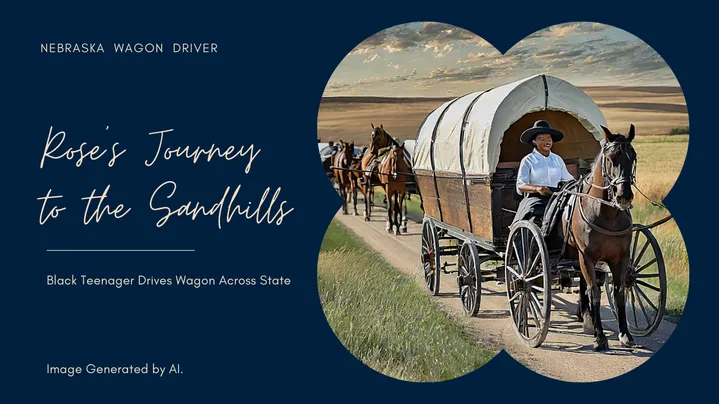
Within weeks of celebrating her sixteenth birthday, Rose Meehan took the reigns of a four-horse team covered wagon and left Overton for Cherry County. She was part of a five-wagon train that included her brother, Dennis, William Crawford, George Brown, Joshua “Doss” Emanuel, and Albert Riley with his brother-in-law (perhaps a Walker family member). Several other family members, including Rose’s parents, traveled by emigrant train with their household goods.
The distance from Overton to Brownlee in Cherry County was about 150 miles. Depending on the terrain, weather, type of wagon, and animals, they may have traveled only ten to fifteen miles a day for a trip that took almost two weeks. Those who drove the wagons were expected to do more than direct the horses. They were responsible for their care and for maintaining the wagon. Drivers were also responsible for setting up and breaking down the campsite and caring for provisions and supplies needed along the way. Finally, the drivers needed adaptability and readiness to handle unexpected challenges or plan changes. This task was not for the faint of heart.
Rose lived with her family in Cherry County for a few short months. On Thanksgiving day of the same year, she married Charles Speese and settled with him in the Speese family home in Westerville. Over the next several years, Rose birthed and raised seventeen children!
DeWitty-Audacious
DeWitty, Cherry County, Nebraska (links to NET website)
My dad laughed and said they renamed the town Audacious after of him. I thought it was simply amazing.
VIDEO: Learn more about this unique piece of Nebraska’s history at Nebraska Stories.
https://www.pbs.org/video/nebraska-stories-nebraska-stories-dewitty-settlement
DeWitty 2016
The peace and beauty of the Sandhills enthralled me. Learn more about and visit the Nebraska Sandhills. https://www.midwestliving.com/travel/nebraska/the-definitive-guide-to-visiting-the-nebraska-sandhills/
DeWitty Documentary by Artes Johnson
This beautiful production by videographer Artes Johnson for Descendants of DeWitty, highlights the history of the DeWitty and Walker families.
Play Ball ~ The North Loup Sluggers
Education: A Pillar of the Canadian Community of Homesteaders
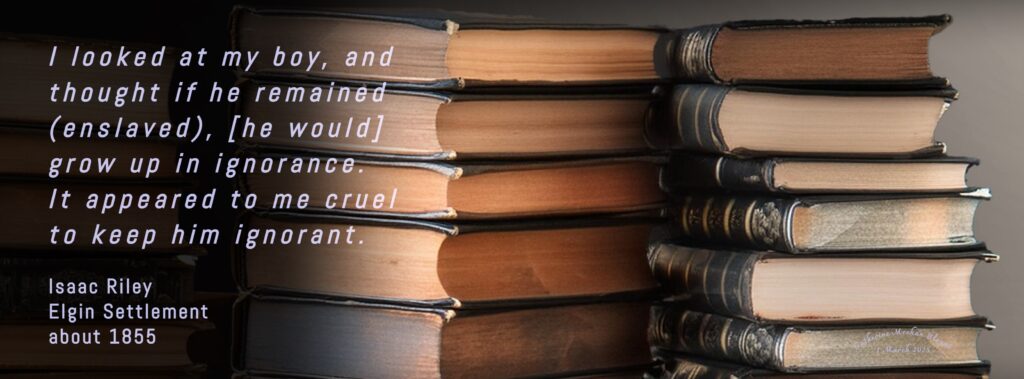
In 1856, Benjamin Drew authored “The Refugee: Or The Narratives of Fugitive Slaves In Canada, Related By Themselves. Isaac Riles and his wife, Catherine, were interviewed. They had been enslaved in Perry County, Missouri. When interviewed by Drew in the Elgin Settlement, he said he “escaped with my wife and child to Canada. …My children can get good learning here.” He went on to equate ignorance to cruelty. Isaac’s wife, Catherine said, “My oldest children go to school. The oldest is well along, and studies Latin and Greek. … I think my present condition here far preferable to what it would have been in slavery. There we were in darkness, here we are in light.” pages 298-299
Isaac Riley was one of the first Black Canadian sojourners in the Elgin Settlement, and one of the first to venture to Overton, Nebraska. When the community migrated to Cherry County, The Riley family was there.
Education was essential to the Homesteaders and it was paramount to the health of the community. When DeWitty was settled, there was no school until the residents built a one-room schoolhouse in 1909.
District 113 ~ One Room School
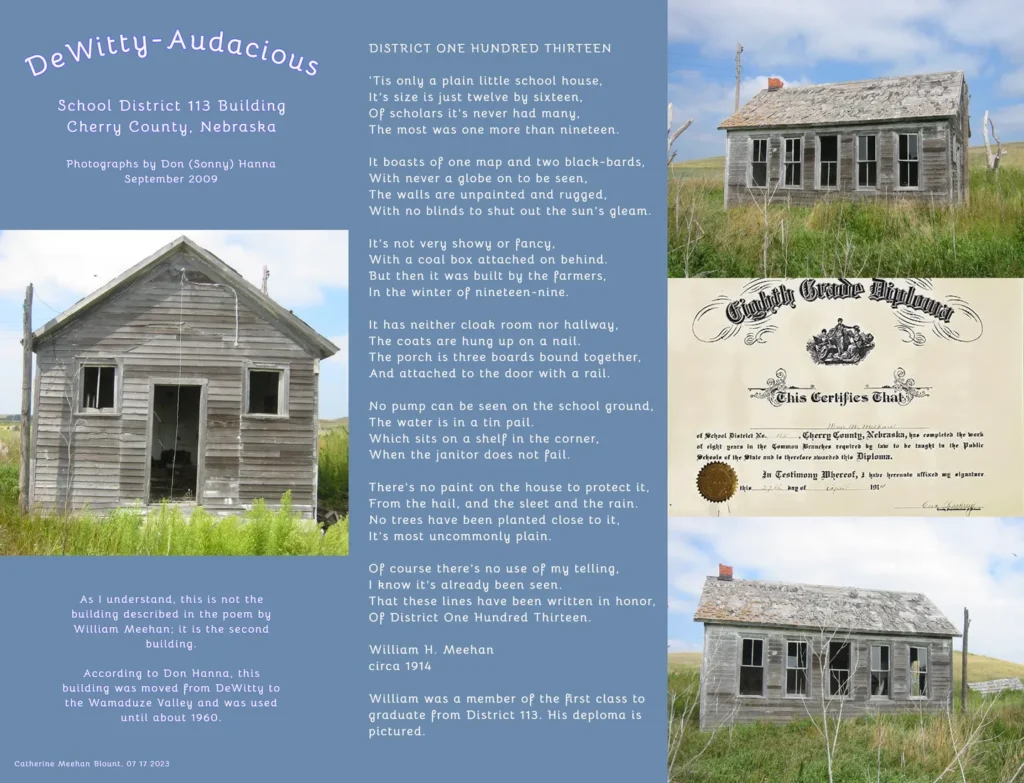
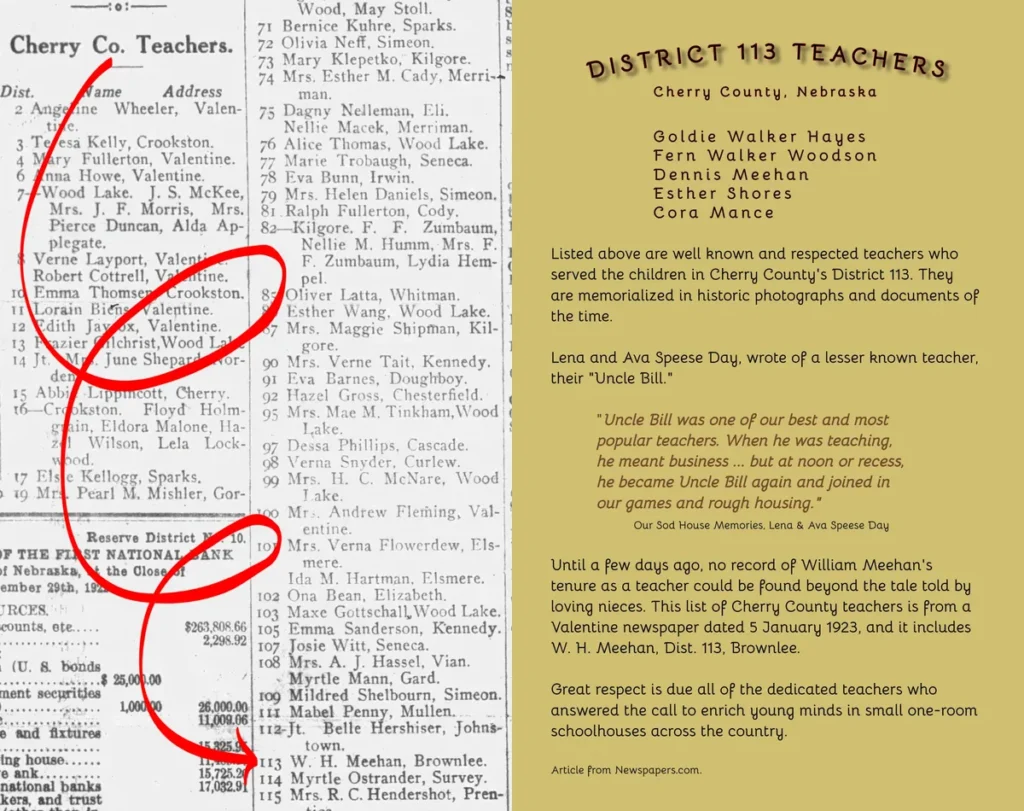
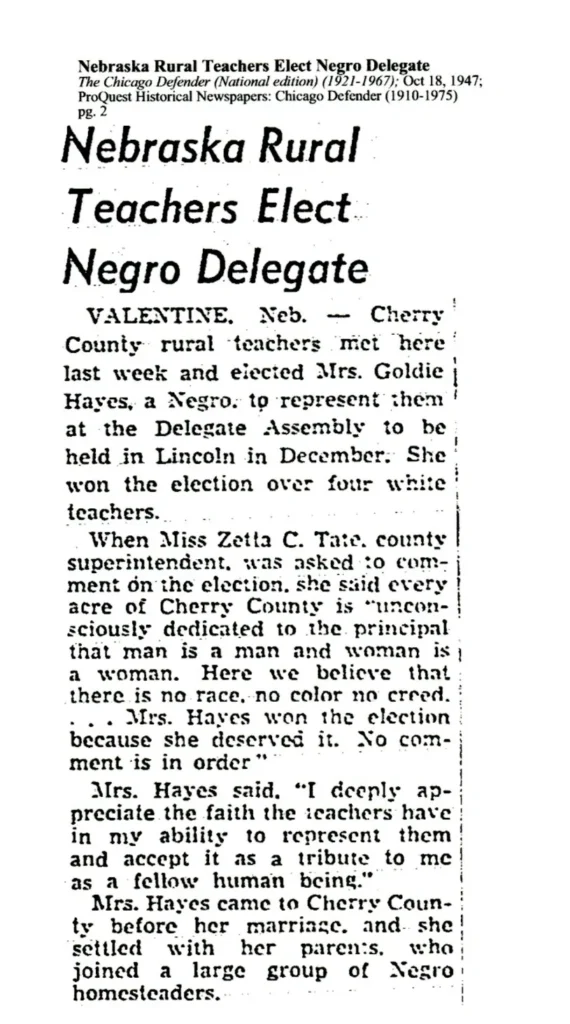
At least two generations of DeWitty children attended the District 113 school. Teachers included Dennis Meehan, William Meehan (after graduation in 1914), Esther Shores, Fern Walker Woodson, and Goldie Hayes.
Students ~ Teachers ~ Delegate
William Harvey Meehan
Mrs. Goldier Waler Hayes
“Colored People Starving”
Rumor Dispelled
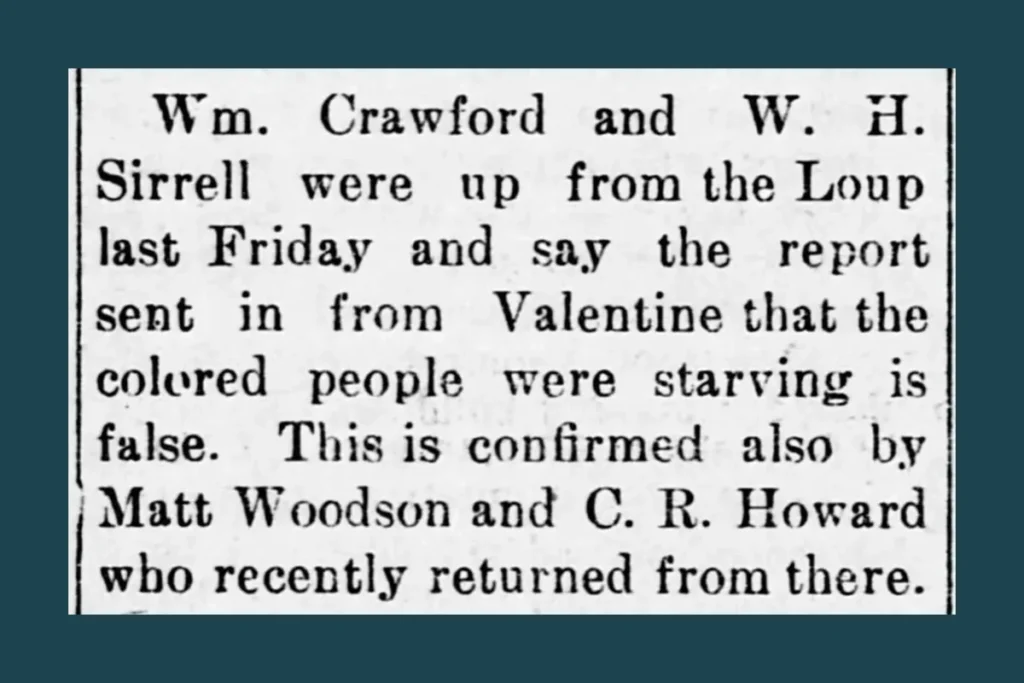
This article appeared in the Valentine Democrat on Thursday, January 19, 1911. Was it neighborly concern or negative expectation?
Whatever the source, the story was unfounded, and the citizens of DeWitty flourished for several years beyond 1911.
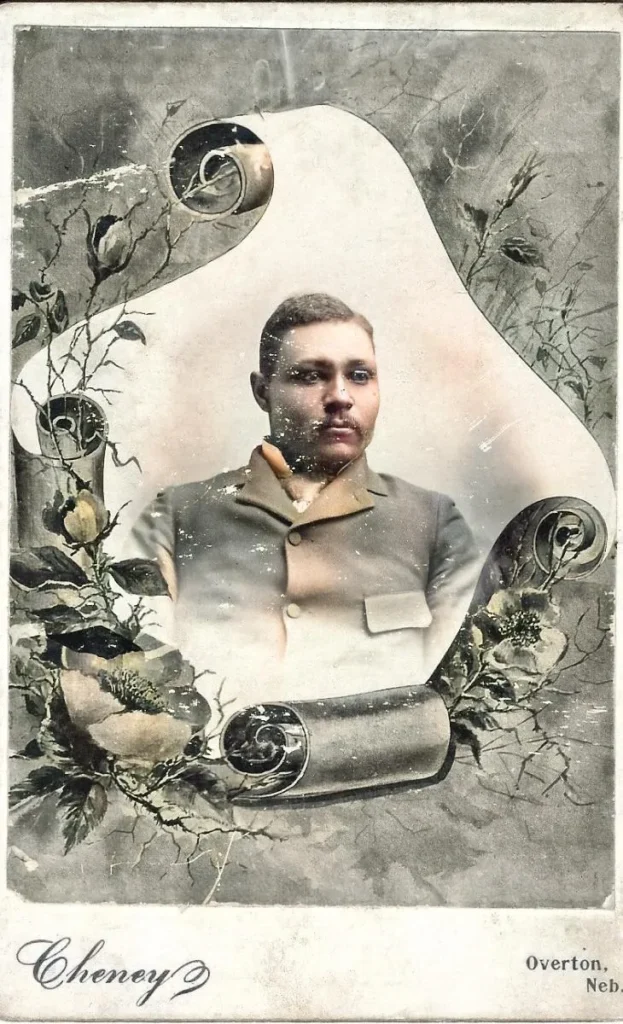
William Crawford of Buxton, Overton, and DeWitty
A Daughter of DeWitty Raised in Illinois

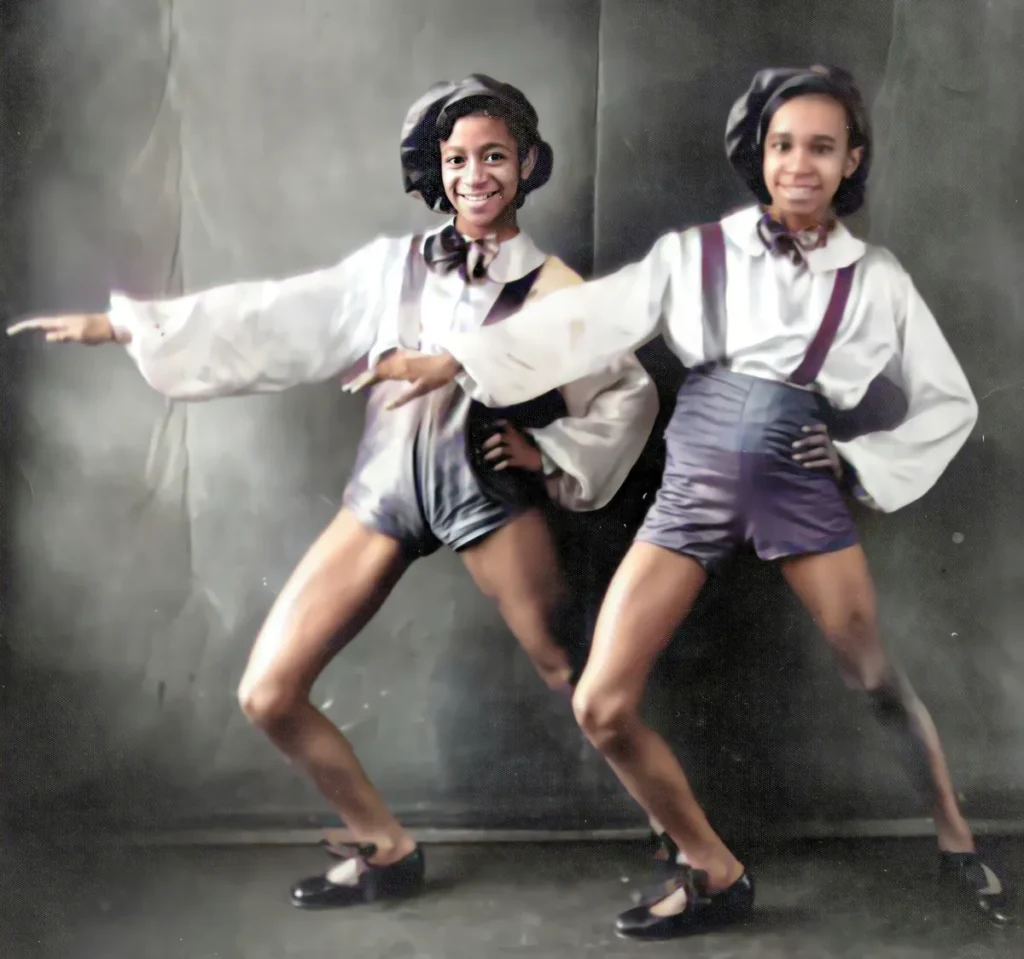
Frank and Amelia Miller Johns raised Faye Johns in Maywood, Illinois. Frank, the nephew of Hester Freeman Meehan, was born and raised in the Chicago area, while his wife, Amelia, was from Lincoln, Nebraska.
Faye’s biological parents were William and Mary Price Ford, DeWitty homesteaders originally from Georgia. A member of the Price family explained that Mary died after the birth of the last of the Ford’s eleven children. Unable to care for all of the children alone, Faye traveled to Chicago and grew up as the child of Frank and Amelia Johns.
Over the years, Faye maintained a vibrant relationship with her Ford family through visits and letters.
Meet the DeWitty Homesteaders
Filmmaker Artis Johnson and the Descendants of DeWitty LLC introduce us to some of DeWitty’s homesteaders. Descendants of DeWitty: The Dewitty Audacious Nebraska Saga is a beautiful presentation performed by family members of those who lived the story. Click the link below to view.
Descendants of DeWitty, LLC
The Descendants of DeWitty LLC is a nonprofit group that promotes and keeps the memory of the founders of DeWitty alive through visual presentations and live enactments.
OVERTON TO THE SANDHILLS BY TRAIN
I’ll check what’s known about the railheads serving Brownlee in 1907 and the station sequences on the likely lines.
The evidence points away from Valentine. Seneca, on the Burlington line, was the DeWitty railhead. Valentine is where they went to file their claims. A route can be reconstructed, and it’s shorter and simpler than going north.
Why Seneca rather than Valentine
- Valentine mattered because the land office was there. Clem Deaver, the railroader who started the whole thing, traveled from the booming railroad town of Seneca in Thomas County to file his Kinkaid at the land office in Valentine, and then returned to Seneca and passed the news to others in Nebraska.
- Ava Speese Davis’s memoir, in the 1969 Nebraskaland article, says Speese cattle were wintered near Wood Lake and shipped to Omaha via the railroad at Seneca. That shows Seneca was the community’s shipping point.
- Distance also favors it. The DeWitty land lay 10 miles northwest of Brownlee, which puts it roughly 20–25 miles from Seneca or Thedford. Valentine is about 40 miles north, with the Niobrara country in between.
- Overton’s whole rail world was the Union Pacific. The Cowboy Line to Valentine (the C&NW line on your map) would have meant going east to Columbus or Fremont and then doubling back northwest through Norfolk and O’Neill. That is a much longer trip. Seneca was only one transfer away.
Likely stop-by-stop route, spring 1907
Leg 1: Union Pacific main line, eastbound
- Overton
- Elm Creek
- Odessa (minor stop)
- Kearney
- Gibbon
- Shelton
- Wood River
- Alda
- Grand Island: change railroads here. The UP and Burlington had separate depots. An emigrant car would be handed from the UP to the Burlington in the yards. Grand Island became a rail crossroads in 1884, when the Burlington & Missouri River Railroad pushed a line northwest from Lincoln.
Leg 2: Burlington (CB&Q), northwest toward Alliance
10. Cairo
11. Ravenna, the Burlington division point. Trains changed crews here, and there was a railroad eating house.
12. Hazard
13. Litchfield
14. Mason City
15. Ansley
16. Berwyn
17. Broken Bow
18. Anselmo (a few minor sidings may sit between Broken Bow and Anselmo)
19. Dunning
20. Halsey
21. Thedford
22. Seneca
From Seneca or Thedford, the last stretch was by wagon, about a day north across the hills to the North Loup.
I took the town sequence from the modern Highway 2 corridor, which follows the old Burlington line through Mullen, Thedford, Halsey, Dunning, Anselma, Merna, Broken Bow, Berwyn, Ansley, Mason City, Litchfield, Hazard, Cairo, Grand Island. Merna appears on that highway list, but I’m not sure the 1907 rail line passed through it rather than nearby. The small flag stops would need checking against a 1907 timetable.
What an emigrant car was
Usually a family didn’t ride a special train. They rented a boxcar that was coupled into a freight train. One Nebraska family described theirs as half stock-car for animals and machinery on one end, and half box-car for the people and household goods on the other. Typically one man rode in the car to tend the stock. The women and children often followed later by ordinary passenger train. In one account from the period, the husband came with the car to take care of the team of horses and cow, while his wife and children came afterward. Freight crews could also set the car off on a siding for hours or days without telling the people inside, so a trip of about 250 miles could stretch out considerably.
A small discrepancy for your records
You have the advance party as five wagons. The 1969 Nebraskaland piece describes the first trip as a train of three wagons: Charles with Rosetta driving, Dennis with George Brown, and William Crawford alone. These may be two different trips, the advance party and then the main move.
To confirm the route with primary sources
- The Official Guide of the Railways for 1907, on HathiTrust, would give the exact station list and train schedules.
- On nebnewspapers.unl.edu, try searching “emigrant car” or “car of goods” in Overton, Seneca, or Thedford papers for spring 1907. Local columns routinely reported who “loaded a car for Seneca.”
Sources: